














About Us

Since 1996, the European Roma Rights Centre (ERRC) has combated anti-Roma racism and human rights abuses across Europe. We exist to dismantle systemic inequality and secure justice for marginalised communities by holding public authorities accountable for discrimination against Romani people and others affected by antigypsyism. Through strategic litigation, human rights monitoring, advocacy, and investigative journalism, we demand equal rights in practice for our communities, without fear or compromise.

Who We Are

We are an international organisation of activists and lawyers working across 16 countries to combat anti-Romani racism and human rights abuse. Since 1996, the ERRC has been taking racists to court, exposing discrimination, and fighting for concrete legal protections for Romani communities.

We were originally modelled after activist lawyers in the United States (such as the National Association for the Advancement of Colored People) who used the courts to push for justice for Black Americans during the Civil Rights Movement. The idea was simple: use the courts, combined with relentless advocacy, to dismantle systemic inequality at its roots.

challenge discriminatory laws and practices. We produce hard-hitting research to put Roma rights on political agendas and force policy change. We investigate and report on human rights abuses that others ignore. And we train Romani activists and lawyers with the tools to fight discrimination in their own communities.

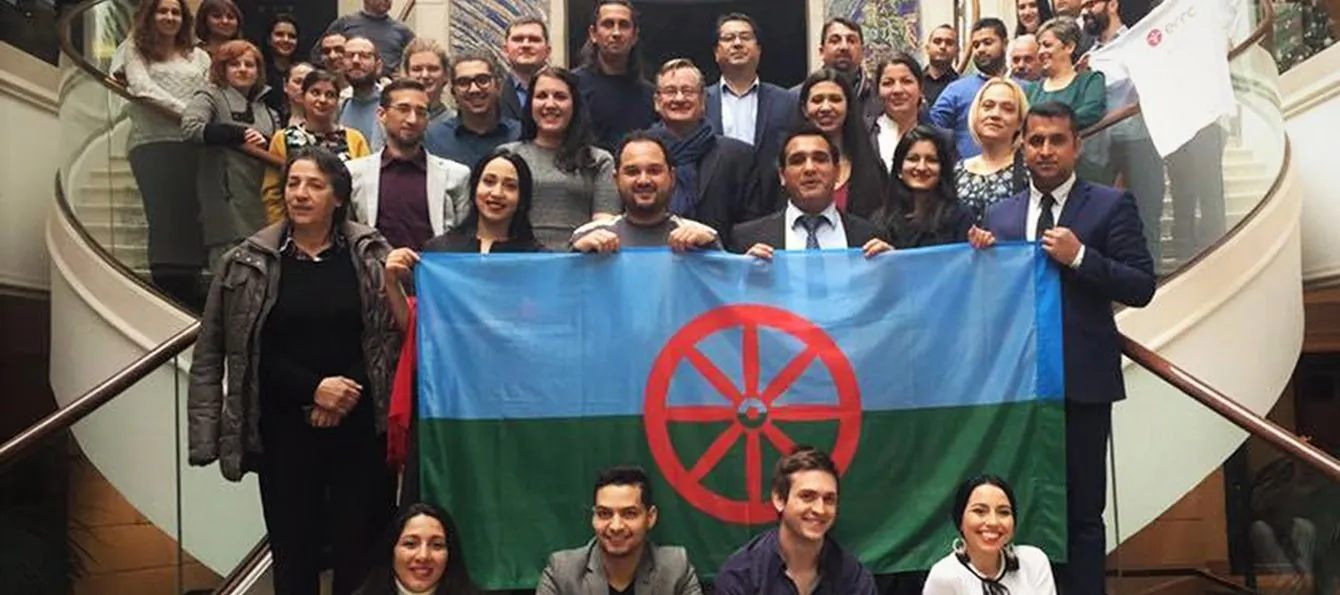
ERRC activists and lawyers holding the Romani flag

Our activists and lawyers are spread across Europe, with a focus on Central, Eastern, and Southeastern Europe, where Romani communities face some of the most severe exclusion on the continent. Our current priority areas are:

  • Police Racism
  • Environmental Racism
  • Discrimination in Education
  • Health Discrimination
  • Racism at the Border
  • Sexual & Gender Discrimination
  • State Care Discrimination
  • Statelessness
  • Racism in the Judicial System
  • Far-right movements

Our goal is to expose and tackle the breadth and variety of antigypsyism, and to give Romani individuals and organisations the tools to defeat it themselves. We operate on the belief that sustainable change comes from communities themselves standing up to claim their rights, not from delivering justice on their behalf.

We are Roma-led, unapologetically human rights centred, and committed to lasting change for our communities

Our Team

Advocacy & Communications

  • President

    Đorđe Jovanović

  • Advocacy & Communications Director

    Jonathan Lee

  • Women’s Rights Officer

    Anna Orsos

  • Advocacy & Policy Manager

    Bernard Rorke

  • Advocacy & Communications Officer

    Judit Ignácz

Legal

  • Legal Director

    Vivien Brassói

  • Legal Director

    Senada Sali

  • Legal Consultant (Serbia)

    Andrea Čolak

  • Legal Consultant (Slovakia)

    Michal Zalesak

Operations

  • Director of Operations

    Marek Balaz

  • Financial Officer

    Julianna Oros

  • Research and Development Officer

    Hannah Crane

  • Legal Consultant (Slovakia)

    Michal Zalesak

  • Project Implementation Associate

    Bojana Kozomora

Our Team in the Field

  • LGBTQI+ Human Rights Monitor

    Ana Jovanović

  • Country Facilitator

    Mustafa Asanovski

  • Country Facilitator (Italy)

    Rosi Mangiacavallo

Volunteer Programme

  • Country Facilitator

    Mustafa Asanovski

  • National Volunteer Coordinator for Albania

    Roxhers Lufta

  • National Volunteer Coordinator for Serbia

    Sadik Saitović

Our Board

  • Board Chair

    Ethel Brooks

  • Board Member

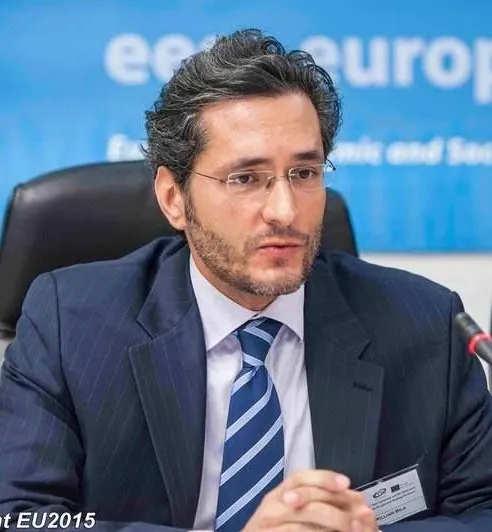
    William Bila

  • Board Member

    Abigail Smith

  • Board Member

    Marc Willers

European Roma Rights Centre is founded!

After a landmark victory involving a Romani man winning a police brutality case in Bulgaria, activists and human rights lawyers from the Open Society Foundation started the ERRC. The centre was the first strategic law organisation working on Roma Rights in Europe, and was partly inspired by the successes of the NAACP in the Civil Rights movement in the United States.
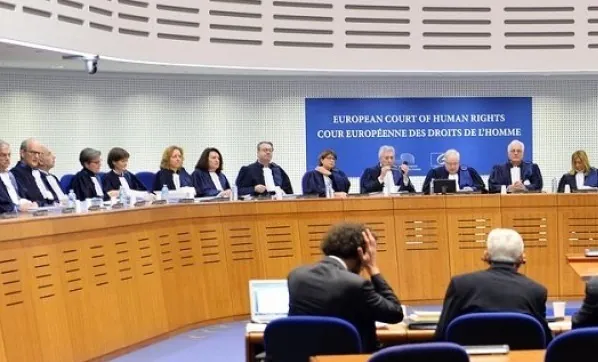

We take our first ever case to the European Court of Human Rights…and lose.

In September 25, 1996, the ECHR in Strasbourg turned down the case of Buckley v. the United Kingdom. It was the first case ever initiated by a British Romani applicant and was to decide whether British authorities had violated the right to respect for the home and family life of the applicant, Ms. June Buckley, by refusing to give her permission to station permanently, on her own land, caravans in which she had been living together with her family.

Our First Legal Victory!

The Czech Constitutional Court ruled that a Civil Court had failed to deliver justice to Roma who had requested their case involving forced eviction and deportation be heard before a judge.

Read more

First Case on Housing Rights at European Level

One year after we lodged this case with the European Committee of Social Rights, the Committee found Italy in violation of its human rights obligations, including by forcibly evicting Roma. The battle for housing rights for Roma has only intensified since.

Read more

ERRC vs. Immigration Officer at Prague Airport

Antigypsyism spans Europe. In the period just before the European Union’s eastward expansion, it was on full display when the United Kingdom sent border guards to Prague Airport, who then racially profiled Romani passengers and stopped them boarding flights to the UK. We took them to court in our own name. The case reached the UK’s highest judges, who found in our favour.

Read more

Grand Chamber Condemns Police Murder

The Grand Chamber of the European Court of Human Rights delivered a judgment on the police killing of two Romani men, finding that the Bulgarian authorities were responsible for the deaths and failed to carry out an investigation capable of unmasking any racial motivation. The case set the standard for judging similar cases in the future and put States on notice that they would be held accountable for not taking murder and ill-treatment of Roma seriously.

Read more

Win Case Against Romania on Pogrom and Mob Killings.

Moldovan & Others vs. Romania

Romanian police were complicit in mob violence and, with the ERRC’s support, the victims got justice, in a case that concerned not only their right to be free from ill-treatment, but also their right to housing. The case remains a landmark for anti-discrimination law in Europe.

Read more

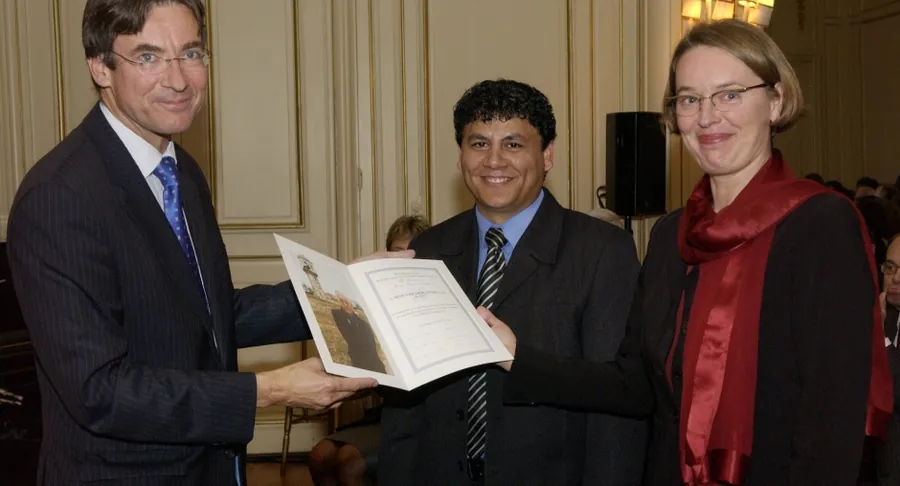
ERRC Wins Max van der Stoel Prize!

The European Roma Rights Centre was presented the award by Knut Vollebaek, the OSCE High Commissioner on National Minorities, in a ceremony at the Hague on October 16th 2007. The ERRC was praised for its “long-term commitment to combating discrimination against Roma and its laudable efforts to attract attention to this pressing problem facing Europe as a whole."

Read more

D.H. & Others vs. Czech Republic

Hailed as “Europe’s Brown v Board of Education”, this was the first legal victory at European level against segregation of Romani children in Europe, and paved the way for other desegregation cases across the continent. Most importantly, it changed the narrative about segregation and showed the world that this practice amounts to racial discrimination. The Czech Republic was condemned for widespread misdiagnosis of Romani children has having intellectual disabilities, leading to their segregation. The ERRC continues to combat school segregation and pushes for inclusive education for all children.

Read more

Hungary Forced to Compensate Romani Woman for Coerced Sterilisation

During preparation for a caesarean section, a Romani woman was asked to sign forms giving her consent to this operation as well as to her sterilisation. The doctors did not explain the procedure, its nature, possible risks, or what the consequences of being sterilised would be. Only after the operation did she learn that she had been sterilised.

Read more

Orsus & Others vs. Croatia

Schools in Croatia were segregating Romani kids who could not speak Croatian into separate classes and leaving them there for their whole education. The European Court’s Grand Chamber judgment found that this was segregation, exposing yet another perverse way States exclude Romani children.

Read more

First Ever Report on Trafficking of Romani People

This was the first research to show the disproportionate impact of trafficking on Romani communities in Bulgaria, the Czech Republic, Hungary, Romania and Slovakia. Romani women and children were found to be particularly vulnerable to trafficking.

Read more

ERRC Wins Stockholm Human Rights Prize

The ERRC won one of the most prestigious awards in human rights, in recognition of our work at European level to advance the rights of Romani people.

Read more

Horvath & Kiss vs. Hungary

After the Czech Republic, it was inevitable that Hungary too would be found in violation of the European Convention for misdiagnosing Romani children with intellectual disabilities and segregating them.

Read more

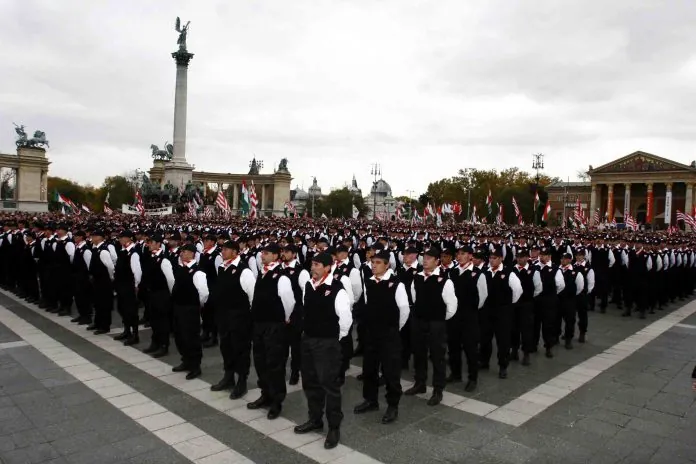
Far-Right Paramilitary Dissolved with ERRC legal support (Vona vs. Hungary)

The Magyar Gárda was dissolved after the European Court of Human Rights ruled that its leader, Vona Gábor, had not had his right to free speech violated. The ERRC submitted a third party intervention which addressed attitudes towards racism in democratic society, discrimination against Roma, particularly in Hungary, and the obligation of states to protect their Romani minorities.

Read more

ERRC becomes Roma-led!

For the first time, in 2016 the ERRC appointed a Romani Board Chair and a Romani President, ensuring Romani leadership across the top of the organisation for the first time. The following year, ERRC staff became Roma-majority for the first time in the organisation’s history.

Read more

ERRC First Ever Report Documenting Disparities in Access to Water Across Europe

The report summarised research carried out by the ERRC, between 2014 – 2016, covering 93 Romani neighbourhoods and settlements in Albania, France, Hungary, Macedonia, Moldova, Montenegro, and Slovakia. It demonstrated that unequal access to water in Europe is an ethnic issue, rather than a geographic one.

Read more

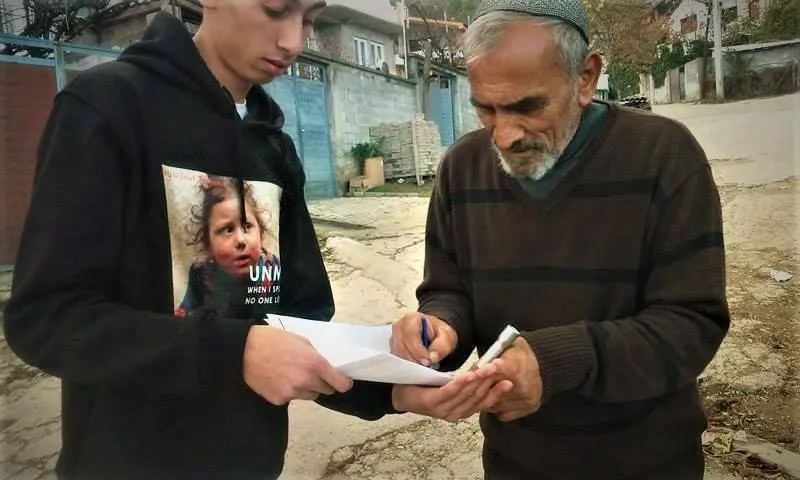
Over 10,000 people sign petition for justice for Romani victims of UN lead poisoning.

We began the campaign following a damning report published by the Human Rights Advisory Panel in April 2016. This panel called on the United Nations Interim Administration Mission in Kosovo (UNMIK) to publicly acknowledge its abject failure to comply with applicable human rights standards and apologise to Roma, Ashkali and Egyptian Internally Displaced Persons (IDPs) placed in lead contaminated camps, and to compensate victims for material and moral damage.

Read more

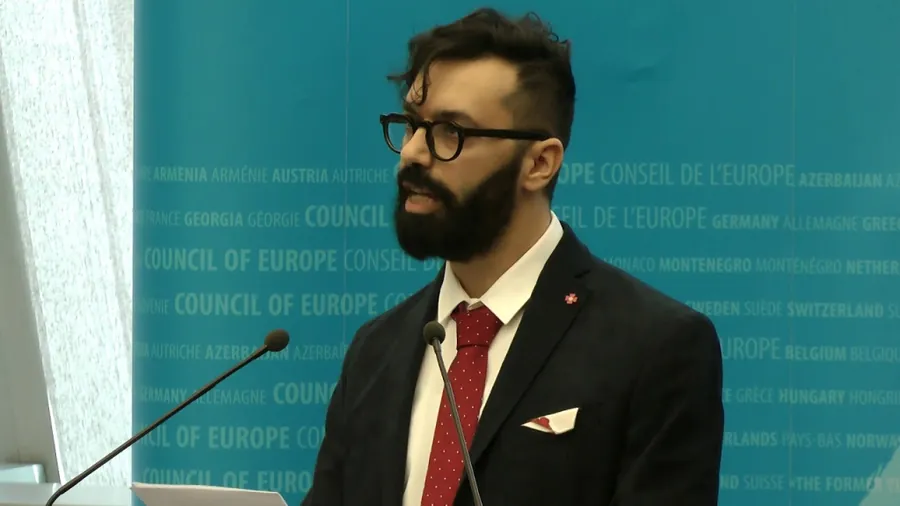
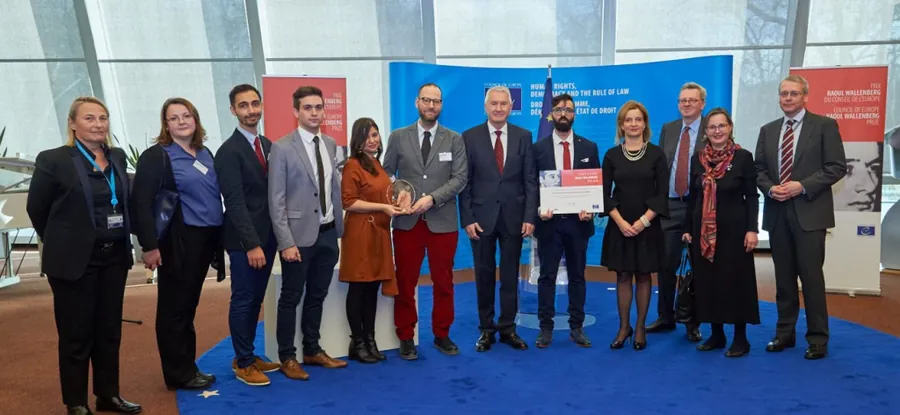
ERRC Wins Raoul Wallenberg Prize!

The prize was awarded in a ceremony in Strasbourg on the date of Raoul Wallenberg’s arrest by Soviet forces in Budapest in 1945. The Secretary General of the Council of Europe praised the ERRC for being “unrelenting” in our efforts to fight for Roma rights across Europe in a time of increasing antigypsyism.

Roma Rights Defenders Network Launched

The ERRC launched its volunteer section in June 2018 at Europe's largest gathering of Romani and Travelling people: Appleby Horse Fair, England. The network of Roma and non-Roma across Europe help the ERRC mobilise and challenge human rights violations throughout the continent. Join up here.

Two Romani Women Appointed to Lead ERRC Legal Programme!

In 2020 the legal work of the organisation was taken over by Senada Sali and Vivien Brassói, two Romani women from North Macedonia and Hungary. Their appointment brought Roma to all management positions at the organisation, with a majority of these being Romani women.

  • The ERRC practices strategic litigation, meaning we only take cases designed to expose and contribute to the elimination of discriminatory structures that prevent Roma from enjoying full equality. In cases where we are unable to provide legal support, we endeavour to find local legal solutions for victims of rights abuses.

  • The ERRC seeks to attack racist structures and institutions using a combination of strategic litigation, advocacy (local, national and international), human rights education, and communications and media production. Our in-country monitors, activists, researchers, partners and lawyers help us identify discriminatory systems which deny Roma full equality. We then use a combination of the above mentioned tools to strategically expose these systems of discrimination and eliminate them.

  • The Board of the ERRC is made up of recognised experts in their fields who work on Roma rights issues. It has overall control of appointing the management of the organisation and ensuring the ERRC mission is realised. The Board is presided over by the Board Chair. The ERRC is directed day-to-day by the President who oversees the program activities and direction of the organisation as a whole. Our Managing Director oversees the legal activities of the ERRC.

  • We post calls for internships, traineeships and jobs on our website, by email to our subscribers, and to our followers on social media. Keep an eye out on these channels for any opportunities that come up at the ERRC. If you have a proposal for special work you would like to carry out with us aside from those we issue a call for, you can send this along with your CV to the relevant staff member for consideration.

  • We work mostly on a national or international level to change structures and practices which serve to oppress Roma. We can’t challenge every single violation against our people. Simply put, we only have so much money and resources, and we try to use these to carry out work that will affect the most long-term change in the lives of Roma in Europe. Our strategy is to look at the bigger picture and directly challenge human rights violations in a way that will help to stop these crimes happening again and again.

  • The ERRC receives the majority of its funding from the Swedish International Development Agency and the European Commission. We are also grateful for project funding and private donations from individuals and organisations across the world. We do not receive funding from state governments or political parties.

  • We rely on a wide network of activists, human rights monitors, lawyers, journalists and partner organisations for accurate information from the field in countries we are active in. The information provided is thoroughly fact checked by experts at the ERRC before it goes to publication. Any information we publish in translation is further checked by experts who are native speakers of that language. If we chose to use information that cannot be corroborated for certain, this is made clear, and the facts and circumstances are laid out. The ERRC’s submissions, reports, news, and training materials are recognised as being a reliable source for Roma Rights issues by journalists, international organisations, NGOs, academics and governments.

  • The ERRC is a civil society organisation with no political affiliation. We do not interfere with party politics in the countries we work in, nor do we accept funds from governments or political parties. As a Roma rights organisation, the ERRC is solely concerned with the protection of the human rights of Romani people, and we are not concerned with the political views of the people we fight to protect. Our independence from national politics is evident in our consultative status with the Council of Europe, as well as with the Economic and Social Council of the United Nations.

  • We have a data protection policy that you can find here. You can check out all our policies in our policy manual.

  • You can find our equal opportunities policy in our policy manual.

  • Yes, we have a policy for safeguarding children and vulnerable adults. This is very important to us. You can find the policy in our policy manual.

  • You can see all of our policies in our policy manual.